Further Reading
Ancient Historians & Modern Scholars
As an Amazon Associate, we earn from qualifying purchases.
What is known of the public man comes from two very different kinds of writing: Roman-era historians working with court access and senatorial gossip, and modern classicists and biographers who have spent careers reconciling those ancient accounts with the private notebook Marcus left behind. Read alongside The World of Marcus Aurelius and the Names in the Text, these four books fill in what the text itself leaves out.
Ancient Historians
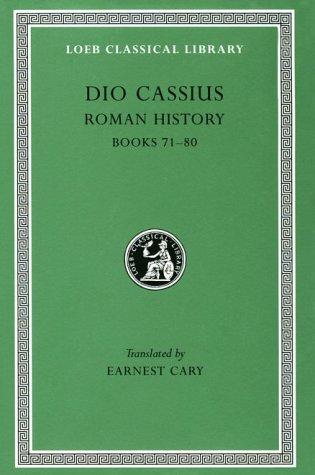
Roman History, Books 71–80 — Cassius Dio
Cassius Dio was a Roman senator, consul twice over, and historian born around 155 CE — in Antoninus Pius’s reign, a few years before Marcus’s own — who wrote his 80-book Roman History decades later, drawing partly on his own family’s access to imperial court circles. Book 71 covers Marcus’s reign directly — the Marcomannic Wars, the revolt of Avidius Cassius, the emperor’s own habits and temperament — and is one of only two substantial ancient narrative sources for his life as a ruler, alongside the Historia Augusta. Dio’s books on this period, however, don’t survive complete; what survives is mostly preserved through later Byzantine epitomes (excerptors like Xiphilinus), not the original unabridged text.
Buy on Amazon →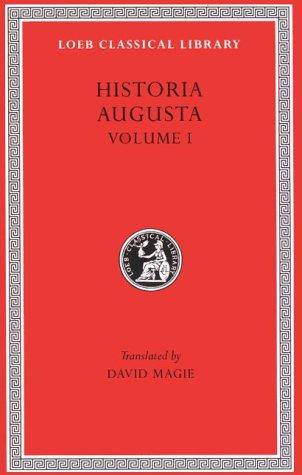
Historia Augusta, Volume I
A collection of Roman imperial biographies running from Hadrian to Carinus, written — under several invented author names — by a single unknown writer probably working in the late fourth century, two hundred years after Marcus died. Volume I includes the Life of Marcus Aurelius, the main surviving source for biographical detail the Meditations never mentions: his childhood, his adoption by Antoninus Pius, his marriage to Faustina, the Avidius Cassius revolt. Modern historians treat it with real caution — it’s demonstrably embellished and sometimes invents sources outright elsewhere in the collection — but for Marcus specifically, much of it lines up with Dio and with Marcus’s own correspondence, and it remains a source scholars can’t do without.
Buy on Amazon →Modern Scholars
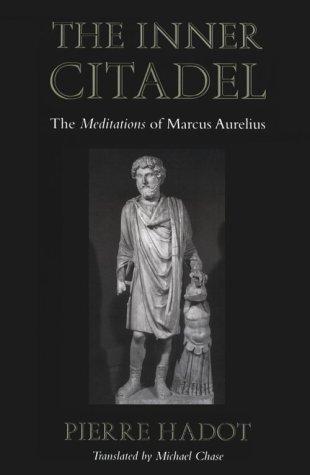
The Inner Citadel: The Meditations of Marcus Aurelius — Pierre Hadot
The standard scholarly study of the Meditations specifically, by the French philosopher whose work on ancient philosophy as lived practice (rather than abstract argument) reshaped how classicists read Stoic texts generally. Hadot’s central claim is that the Meditations only looks like a disorganized private notebook — underneath the repetition, he argues, Marcus is working within a structured system of three Stoic “disciplines” (of desire, of action, and of assent) inherited from Epictetus, returning to each in turn rather than rambling at random. For readers who find Marcus’s repetitiveness an obstacle, this is the book that explains the underlying structure.
Buy on Amazon →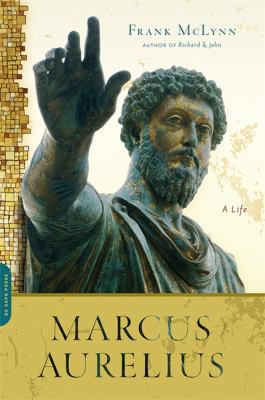
Marcus Aurelius: A Life — Frank McLynn
A full-scale modern biography, suited to readers who prefer the connected story to Hadot’s philosophical close-reading: Marcus’s succession, his wars on the Danube frontier, his family, his health, his surviving letters to and from his tutor Fronto. McLynn is a narrative historian rather than a classicist, and he synthesizes Cassius Dio, the Historia Augusta, and the Fronto correspondence into a single readable account that gives the Meditations a timeline and a cast of characters most readers encounter for the first time when reading the notebook cold.
Buy on Amazon →Books on living Stoicism, as distinct from studying Marcus’s life, are covered separately at Modern Stoicism. Peer-reviewed journals and academic companions are listed in the Recommended Sources section of Choosing a Translation.