As an Amazon Associate, we earn from qualifying purchases.
The Meditations applies Stoic philosophy to the practical circumstances of a single life rather than presenting a formal treatise intended to persuade a reader. The works discussed here extend that same project into the present, applying Stoic principles — including Marcus’s own — to the circumstances of daily life. None substitutes for the primary text or a modern translation of it; each instead performs a function the Meditations does not attempt on its own: explaining its ideas, organizing them systematically, or situating them within the broader tradition of Stoic philosophy.
Ten of the thirteen books are by Ryan Holiday, a writer and former marketing executive, several of them written with Stephen Hanselman. The books are ordered by Amazon sales rank as of September 2026.
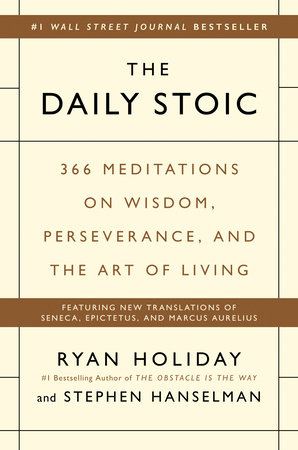
The Daily Stoic — Ryan Holiday & Stephen Hanselman
Portfolio, 2016
366 short daily entries drawing on Marcus, Seneca, and Epictetus, each with a new translation of the source passage and a page of commentary. The form, a brief recurring exercise rather than a sustained argument, is close to that of Marcus’s own notebook. The book is written for readers who want Stoicism as a daily practice rather than a subject of study.
Buy on Amazon →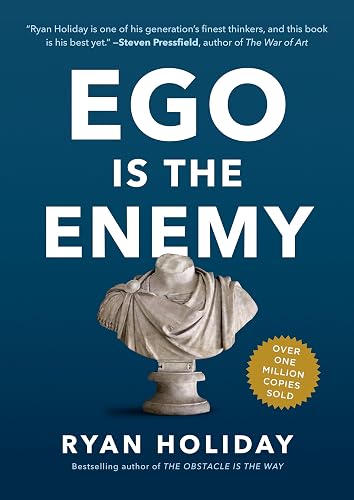
Ego Is the Enemy — Ryan Holiday
Portfolio, 2016
Organized in three parts, on aspiration, success, and failure, it treats ego as an obstacle at each stage, drawing on Stoic writers among others and on biographical examples.
Buy on Amazon →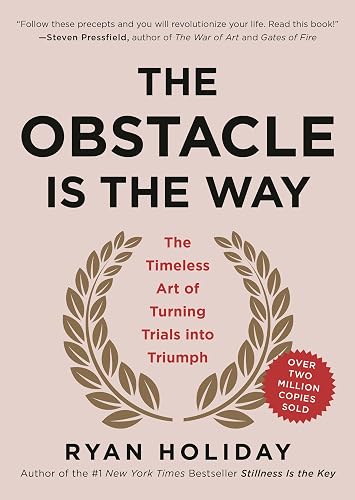
The Obstacle Is the Way — Ryan Holiday
Portfolio, 2014; expanded tenth-anniversary edition, 2024
The title comes from
Meditations V.20, where Marcus writes that the mind turns whatever blocks its action into a help to it; Haines renders the final clause “that which is a hindrance in our path goes but to make it easier.” The book applies that idea to setbacks, through short historical and modern examples.
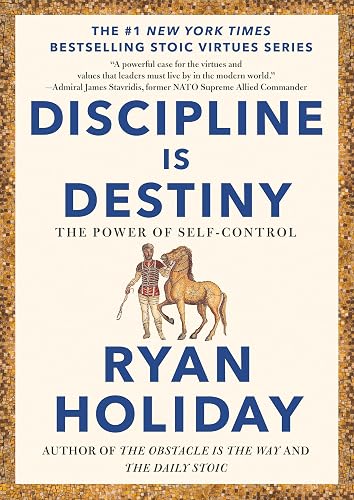
Discipline Is Destiny — Ryan Holiday
Portfolio, 2022
The second volume of Holiday’s four-volume Stoic Virtues series, which gives one book to each of the four cardinal virtues of Stoic ethics: courage, temperance, justice, and wisdom. This volume is on temperance, which its subtitle calls The Power of Self-Control.
Buy on Amazon →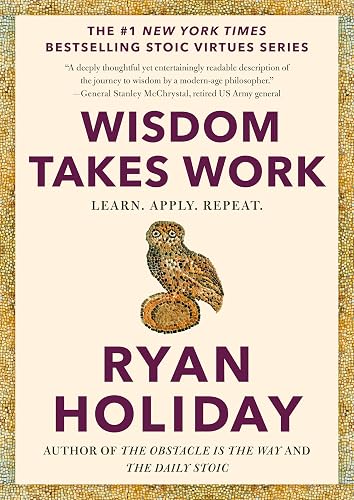
Wisdom Takes Work — Ryan Holiday
Portfolio, 2025
The fourth and final volume of the Stoic Virtues series, on wisdom.
Buy on Amazon →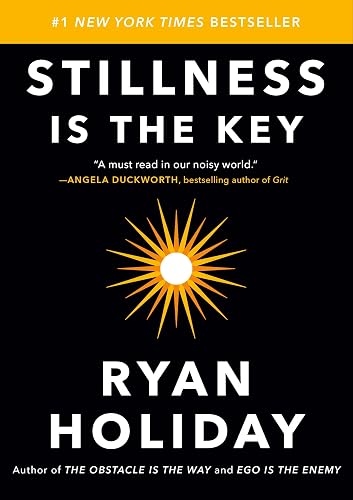
Stillness Is the Key — Ryan Holiday
Portfolio, 2019
Organized in three parts, on mind, spirit, and body, it draws on Stoic writers alongside Buddhist and other traditions.
Buy on Amazon →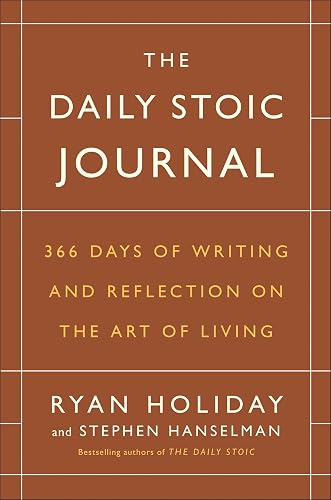
The Daily Stoic Journal — Ryan Holiday & Stephen Hanselman
Portfolio, 2017
A companion to The Daily Stoic, subtitled 366 Days of Writing and Reflection on the Art of Living: a short Stoic prompt for each day of the year, with space for a written answer. The form echoes the Meditations itself, which Marcus wrote as notes addressed to himself.
Buy on Amazon →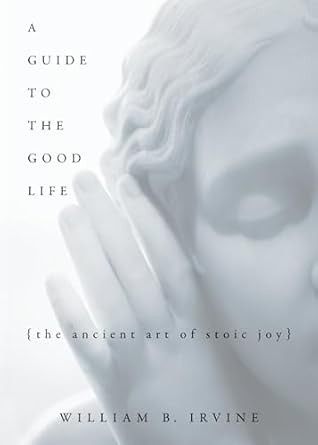
A Guide to the Good Life: The Ancient Art of Stoic Joy — William B. Irvine
Oxford University Press, 2009
One of the books credited with starting the modern Stoicism revival, several years before Holiday brought it to a mass audience. Irvine is a philosophy professor, and the book sits a register more academic than The Daily Stoic while still being written for general readers — it’s organized around specific psychological techniques (negative visualization, a “trichotomy of control” adapted from Epictetus, self-denial as practice) rather than daily readings. Suited to readers who have finished Marcus and want the underlying toolkit named and explained systematically.
Buy on Amazon →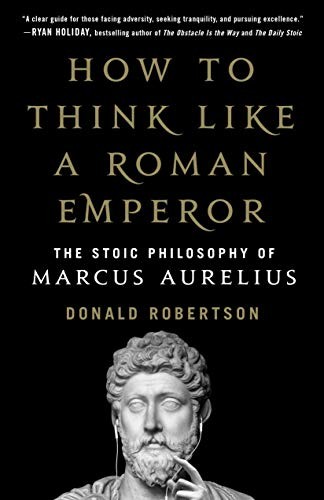
How to Think Like a Roman Emperor — Donald Robertson
St. Martin’s Press, 2019
A chapter-by-chapter walk through Marcus’s actual life — his education, the plague, the wars, the death of his children — paired with the specific Stoic techniques he likely used to get through each one. Robertson is a cognitive-behavioral psychotherapist as well as a Stoicism teacher, and he draws explicit, well-grounded parallels between Stoic practices (like Hadot’s “view from above,” or premeditating adversity) and modern CBT exercises. For readers who have finished the Meditations and want to understand what Marcus was doing to himself on the page, this is the book.
Buy on Amazon →
Courage Is Calling — Ryan Holiday
Portfolio, 2021
The first volume of Holiday’s Stoic Virtues series, on courage.
Buy on Amazon →
Right Thing, Right Now — Ryan Holiday
Portfolio, 2024
The third volume of the Stoic Virtues series, on justice.
Buy on Amazon →
Lives of the Stoics — Ryan Holiday & Stephen Hanselman
Portfolio, 2020
Short biographical chapters on the Stoics from Zeno, the founder of the school, to Marcus Aurelius, as the subtitle,
The Art of Living from Zeno to Marcus Aurelius, describes. Unlike Holiday’s other books, it is primarily biography. The ancient sources for Marcus’s own life are covered in
Ancient Historians & Modern Scholars.
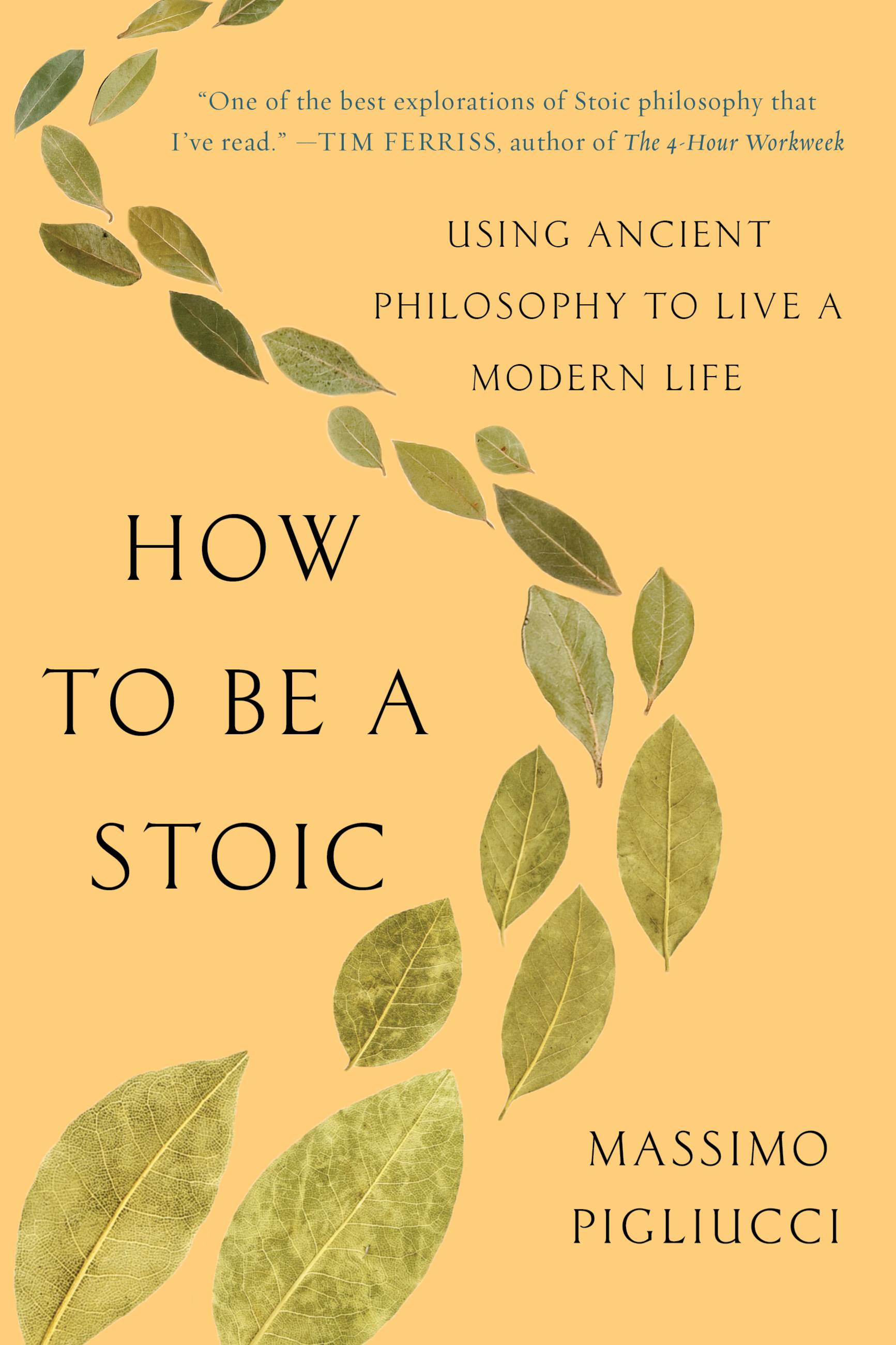
How to Be a Stoic: Using Ancient Philosophy to Live a Modern Life — Massimo Pigliucci
Basic Books, 2017
Trade nonfiction rather than an academic monograph. Pigliucci, a philosopher at the City College of New York, frames the book as an ongoing imagined conversation with Epictetus, using it to work through how Stoic principles hold up against genuinely hard contemporary questions — marriage, politics, illness, death — rather than treating Stoicism as a set of settled answers. The
Key Terms Glossary provides a plainer-English treatment of the same Greek vocabulary (logos, hegemonikon), for readers whose interest in it has begun to deepen.